Usage


Usage |
|
| Trading and C&C > Floating keys |
General considerationsFloating keys allow displaying several different event notifications related to calls and OLD lines. These notifications are grouped in two categories:
Floating keys' allocationThe system allocates the available floating key slots the following way: •The two information buckets (local and distant) are assigned to available floating key slots using a load-balance method to ensure that each bucket receives at least half the available floating slots (see examples below); •Inside each bucket, incoming, established and held calls are distributed in that order. On picture below, there are incoming call, established call, held call and 2 distant calls. 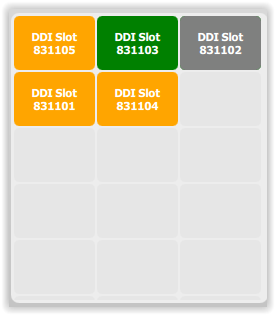 Examples1.Let's assume: twenty-two local notifications (established 1-21, held 1) and three distant notifications (established 22-23, held 2). There are enough slots to display all information: 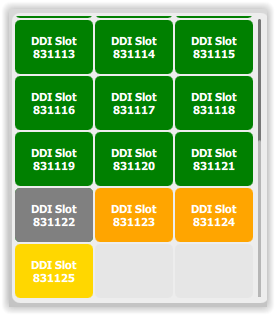 2.Let's assume: twenty-five local notifications (established 1-22, in 1-2, held 1) and three distant notifications (established 23-24, held 2). As there are not enough slots available, the system load-balances the information and allocates twenty-two slots for the first twenty-two local notifications and the other three slots for the three local notifications: 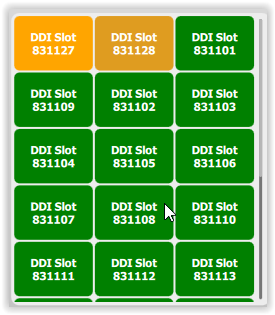 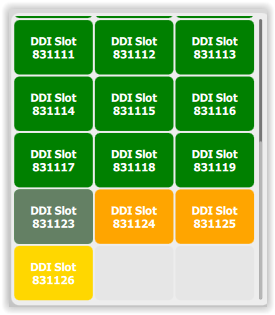 3.Let's assume: twenty-five local notifications (established 1-22, in 1-2, held 1) and one distant notification (established 3). As there is only one distant notification, the system allocates one slot for it and the other twenty-four slots for the first twenty-four local notifications: 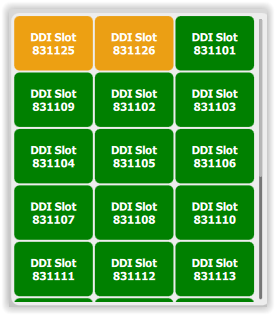 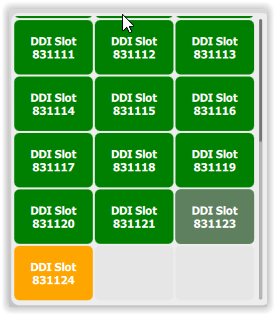
|