Basics - outbound


Basics - outbound |
|
| Enterprise Telephony > Common > Conferencing > Simplified Conference > Usage |
Traditional conference sequenceThe traditional way of establishing a conference with two remote parties (three parties in total), let's say with John and Jack, is performed the following way:
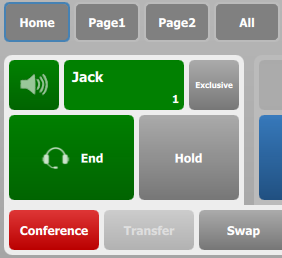
1.Establish a call with John on a handset; 2.Press the Conference button to initiate the conference operation; 3.Establish a new call with Jack on the same handset (the Conference button turns purple); 4.Press the Conference button to validate the conference operation.
Between steps 2 and 4, user looses the speech path with John.
Simplified conference sequence
Using the new simplified conference sequence, the whole operation is faster:
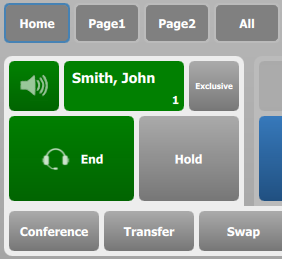
1.Establish a call with John on a handset; 2.Press Jack's call key in the interface to establish a call with him.
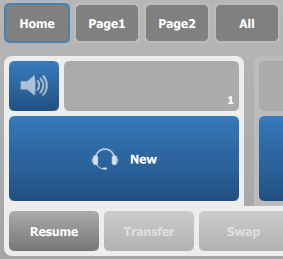
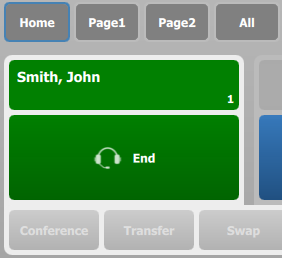
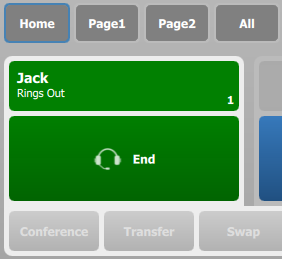
The call to Jack rings out. The handset displays the two calls alternatively:
The first display indicates that the call is still opened with John; the user can still talk to him. The second display indicates the current temporary state of the second call to Jack; call is ringing as Jack has not yet answered.
At this point, no operation can be performed on the call with John, as it is "locked" for the conference. The only operation available on the second call with Jack is a terminate, which can be achieved by pressing the End button on the handset. We can say that the handset represents both calls states, but only allows terminating the second one.
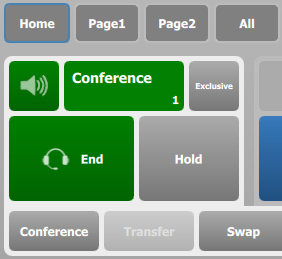
As soon as Jack answers the call, the conference is automatically established.
Note that the user never lost the speech path with John during the operation.
The operation can be repeated several times to add multiple participants, each time pressing a remote party's call key in the interface.
|