Audio Processing


Audio Processing |
|
Abstract
On IPTrade turret, audio processing is a very dynamic behavior going into many different area. These sections describe what can be done.
Physical Audio devices convention
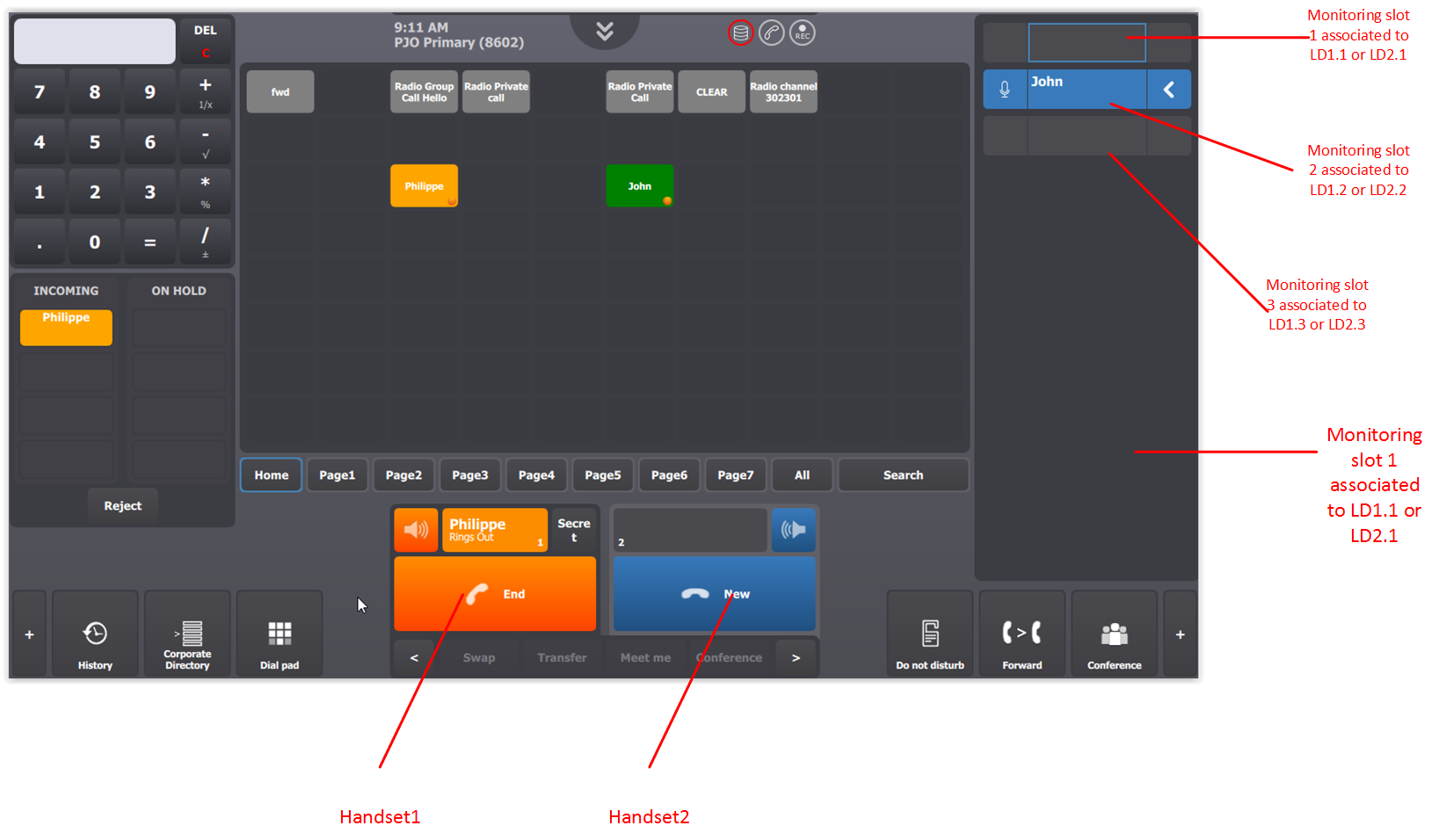
The turret can be physically equipped with 2 handset, one headset, 2 loudspeaker and an external microphone. In the documentation we take the following wording convention.
Audio layers
The system define 3 audio layers that works independently. 1.Visual. Calls position on the screen implicitly assign an audio device while it does mean necessarily that actual voice will be transmitted through that assigned device. 2.Logical. calls are logically assigned to an audio device and whatever the physical device used at the end this logical device remain a reference. 3.Physical. At the very end, actual voice is using that device with the remote party.
Visual Audio layer
Administrator has the ability to assign a loudspeaker (and the associated HF ) to the monitoring applet. As a result, each slot within the monitoring applet receive a visual and logical (see following sections) "number" like LD1.1, LD 2.b,...
Logical Audio layer
The logical audio level is something that do not move whatever the user actions taken on the interface. The perfect example is recording and audio redirection. See recording section.
Physical Audio layer
At some point the user as the ability to move call from one physical device to another while logically and visually the call is not necessarily moved elsewhere. An example is the audio redirection
|